In recent years, technological advancements have significantly transformed the landscape of eye care, leading to more accurate diagnoses and better patient outcomes.
Optical Coherence Tomography
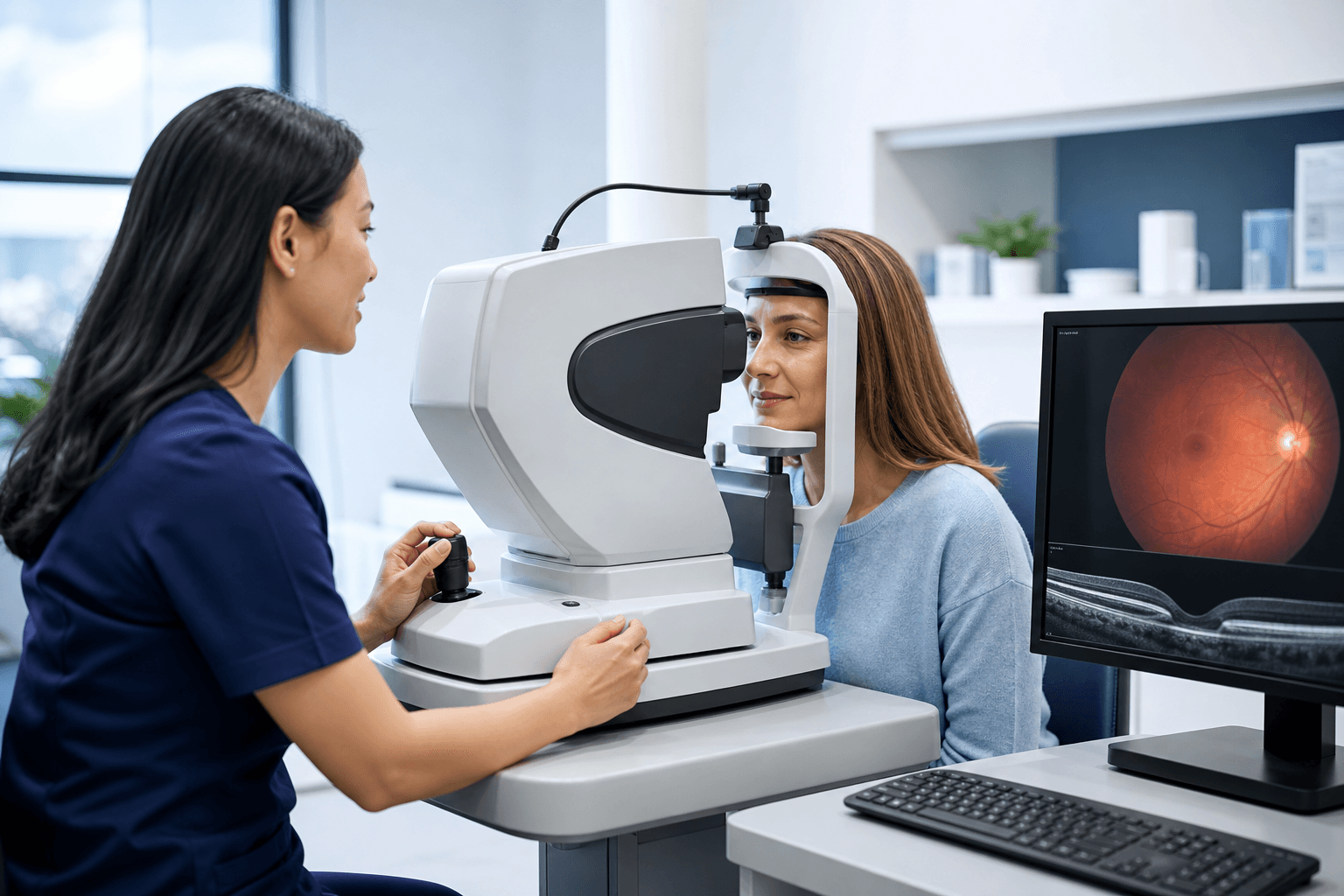
The groundbreaking technologies in eye care are numerous, with one of the main ones being optical coherence tomography (OCT). OCT uses light waves to take cross-sectional images of the retina, providing detailed visuals that can help identify conditions like macular degeneration and diabetic retinopathy at much earlier stages than traditional methods.
Fundus Photography
Another revolutionary technology is fundus photography, which captures detailed images of the interior surface of the eye, including the retina, optic disc, macula, and posterior pole. Modern fundus cameras have improved resolution and sensitivity, making it easier for eye care providers to detect subtle changes in a patient's eyes over time. Timely interventions based on these images can prevent the progression of potentially sight-threatening conditions.
Artificial Intelligence and Machine Learning
Artificial intelligence (AI) and machine learning have also made significant inroads in eye care diagnostics. AI algorithms can analyze large datasets of retinal images far faster than human clinicians and identify patterns indicative of diseases like glaucoma, diabetic retinopathy, and age-related macular degeneration with accuracy. Implementing AI in routine eye exams enables earlier detection and more personalized treatment plans.
Tele-ophthalmology
The advent of tele-ophthalmology has further enhanced diagnostic precision by making specialized eye care accessible to remote or underserved populations. Using high-definition digital imagery and secure internet connections, eye care providers can evaluate patients' eye health from afar. This increases the efficiency of eye care services and helps ensure that individuals who might otherwise lack access to specialized eye diagnostics receive appropriate care in a timely manner.
Corneal Topography
Corneal topography systems have advanced the diagnosis of conditions affecting the cornea, such as keratoconus and irregular astigmatism. These systems generate detailed 3D maps of the cornea, allowing for precise measurement and analysis of its curvature and irregularities. With this data, eye care professionals can develop more effective treatment plans, including customized contact lenses and surgical interventions.
Spectral Domain OCT
The integration of spectral domain technology in OCT scanners has significantly enhanced the accuracy of glaucoma detection. Spectral domain OCT provides high-speed and high-resolution imaging of the optic nerve head and retinal nerve fiber layer, which are crucial in diagnosing and monitoring glaucoma. Early and accurate detection through this technology can lead to earlier interventions, potentially preserving the patient's vision.
Ultra-widefield Retinal Imaging
Ultra-widefield retinal imaging systems allow for comprehensive views of the retina with a single capture, encompassing areas that are difficult to visualize with standard imaging techniques. These systems are particularly valuable for diagnosing peripheral retinal diseases and conditions such as retinal detachment, vein occlusions, and tumors. The broader field of view helps ensure that peripheral anomalies are not missed, allowing for a more thorough examination and accurate diagnosis.
Genetic Testing and the Future of Eye Care
Advancements in biotechnology, such as the development of sophisticated genetic testing, have paved the way for more precise diagnostics in inherited eye diseases. Genetic testing can identify mutations that lead to conditions like retinitis pigmentosa and Leber congenital amaurosis. Early genetic diagnosis enables patients to take preventative measures and explore gene therapy options, revolutionizing the management and treatment of hereditary eye disorders. Through these advancements, the future of eye care is becoming increasingly precise, personalized, and effective.